
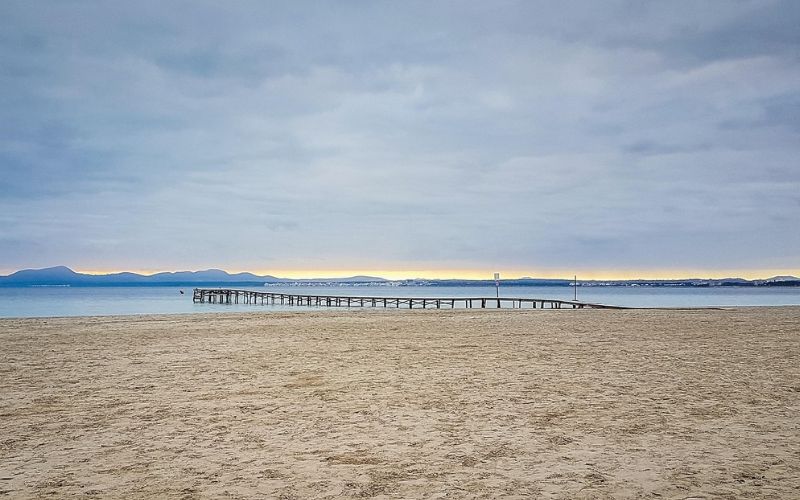
Alcudia is one of the most charming cities in Mallorca, offering a perfect combination of history, culture, and natural beauty. Located in the northeast of the island, this town stands out for its historic old town, impressive medieval walls, and proximity to some of the most spectacular beaches in the region.
In addition to its rich historical heritage, Alcudia offers a wide variety of outdoor activities, allowing visitors to relax at Alcudia Beach or explore the ruins of Pollentia, the largest Roman site in Mallorca. The city is also an accessible destination, with infrastructure adapted for visitors with reduced mobility, making it a perfect option for all types of travelers. In this article, we will explore some of the must-see places in Alcudia, including its old town, archaeological wonders, and natural beauty.
Alcudia old town – A journey into the past

The old town of Alcudia is one of the best-preserved historical areas in Mallorca and a true treasure for history lovers. This area, surrounded by impressive medieval walls, transports visitors back in time with its cobbled streets, stone buildings, and traditional squares. Exploring Alcudia’s historic center reveals numerous architectural details, such as Gothic doorways, stately homes, and small churches of great historical value.
One of the most remarkable highlights of the old town is Alcudia’s wall, which offers visitors the unique opportunity to walk along its ancient fortifications and enjoy panoramic views of the city and its surroundings. This structure, built in the 14th century, played a crucial role in defending Alcudia against pirate attacks and other threats. Today, its towers and bastions allow visitors to imagine what life was like in the fortified city centuries ago.
The center of Alcudia is also famous for its traditional market, held on Tuesdays and Sundays. Here, visitors can find local products, handicrafts, and traditional Mallorcan cuisine. Additionally, accessibility in the old town has improved over time, with adapted streets and access to most points of interest, making it easier for visitors with reduced mobility to enjoy the experience.
Alcudia beach – An accessible paradise

Alcudia Beach, located just a few minutes from the old town, is one of the most popular and accessible beaches in Mallorca. Stretching over seven kilometers, this beach boasts fine sand and crystal-clear waters, making it the perfect place to relax, practice water sports, or simply enjoy a walk by the sea. Its adapted infrastructure makes it one of the most comfortable beaches for visitors with reduced mobility.
The beach features wooden walkways leading to the shoreline, amphibious chairs for swimmers with mobility challenges, and lifeguards trained to assist those in need. Additionally, there are shaded areas, accessible showers, and reserved parking spaces nearby. All of these features make Alcudia Beach an ideal choice for enjoying the sea without worrying about architectural barriers.
Along the seafront promenade, there are numerous bars, restaurants, and shops, many of which have step-free access and spacious terraces. This ensures that the local dining options cater to a variety of tastes and remain inclusive for all visitors.
Pollentia ruins – The roman legacy of Mallorca
For history enthusiasts, the Pollentia ruins are a must-visit site in Alcudia. This archaeological site, located just a few minutes from the old town, is the most important Roman remains in Mallorca. Founded in the 2nd century BC, Pollentia was the Roman capital of the island and still preserves well-preserved ruins showcasing its ancient grandeur.
A walk through the site allows visitors to admire structures such as the Roman forum, which served as the political and commercial center of the city. Another standout feature is the Roman theater, one of the few remaining in the Balearic Islands, with seating carved into the rock and a capacity for approximately 2,000 spectators. This historical venue is still occasionally used for cultural events, offering a unique experience in an ancient setting.
Next to the ruins, visitors will find the Monographic Museum of Pollentia, where they can see original artifacts discovered during excavations, including ceramics, sculptures, and Roman coins. While some parts of the archaeological site have uneven terrain, accessible pathways have been implemented to facilitate visits for people with reduced mobility.